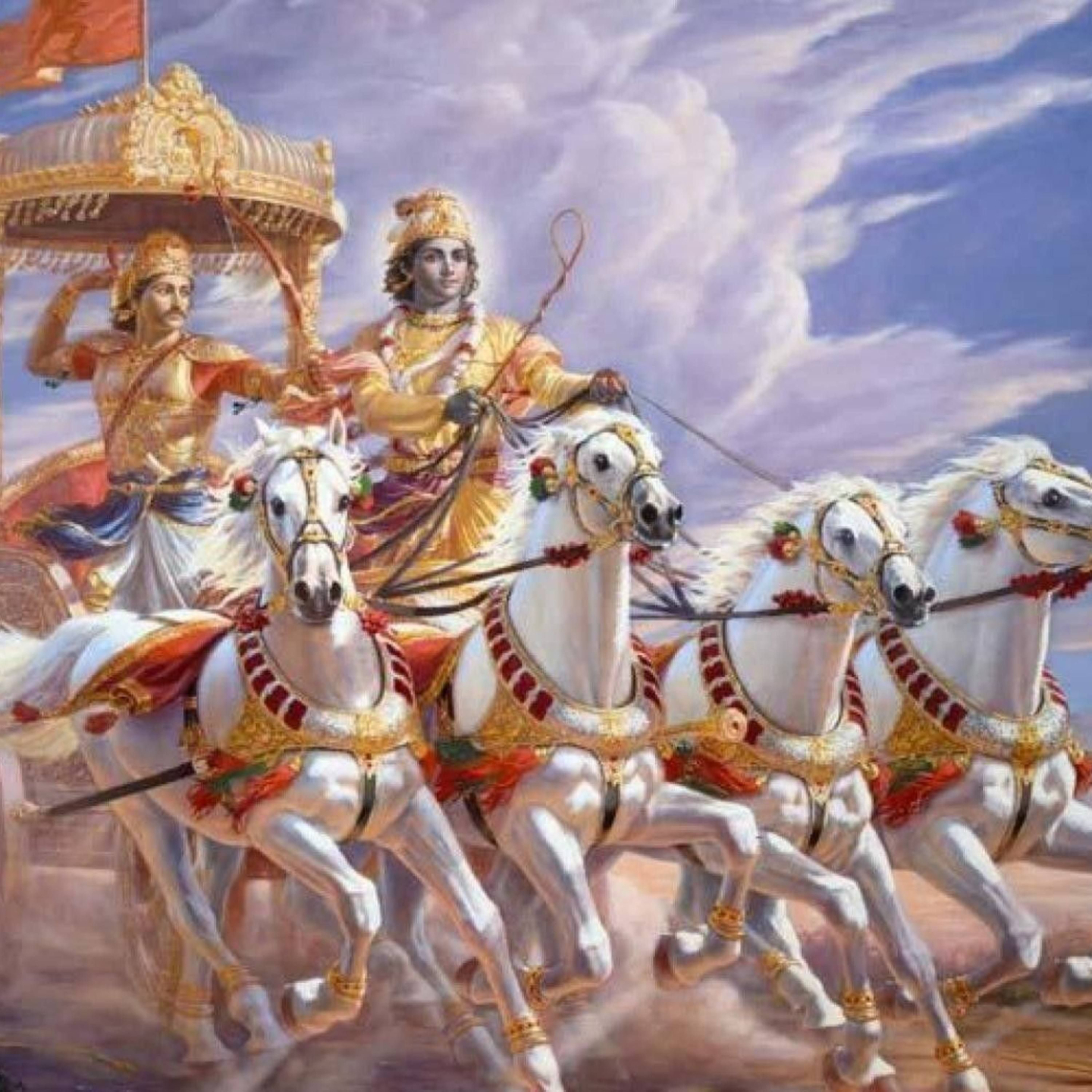
Thoughts and Aphorisms 8. Commentaries by The Mother Â
8—Either do not give the name of knowledge to your beliefs only and of error, ignorance or charlatanism to the beliefs of others; or do not rail at the dogmas of the sects and their intolerance.
Thoughts and Aphorisms 9, 10. with commentaries by The Mother
 9– What the soul sees and has experienced, that it knows; the rest is appearance, prejudice and opinion.
10– My soul knows that it is immortal. But you take a dead body to pieces and cry triumphantly, “Where is your soul and where is your immortality?”
Thoughts and Aphorisms 11. with commentaries by The Mother
11_ Immortality is not the survival of the mental personality after death, though that also is true, but the waking possession of the unborn and deathless Self of which body is only an instrument and a shadow
Thoughts and Aphorisms 12. with commentaries by The Mother
12—They proved to me by convincing reasons that God did not exist, and I believed them. Afterwards I saw God, for He came and embraced me. And now which am I to believe, the reasonings of others or my own experience?
Thoughts and Aphorisms 13 to 15 with commentaries by The Mother
13—They told me, "These things are hallucinations." I inquired what was a hallucination and found that it meant a subjective or psychical experience which corresponds to no objective or no physical reality. Then I sat and wondered at the miracles of the human reason.
14—Hallucination is the term of Science for those irregular glimpses we still have of truths shut out from us by our preoccupation with matter; coincidence for the curious touches of artist in the work of that supreme and universal Intelligence which in its conscious being, as on a canvas, has planned and executed the world.
15—That which men term a hallucination is the reflection in the mind and senses of that which is beyond our ordinary mental and sensory perceptions. Superstition arises from the mind's wrong understanding of these reflections. There is no other hallucination.
Thoughts and Aphorisms 16 to 18 with commentaries by The Mother
16—Do not like so many modern disputants smother thought under polysyllables or charm inquiry to sleep by the spell of formulas and cant words. Search always; find out the reason for things which seem to the hasty glance to be mere chance or illusion.
17—Someone was laying down that God must be this or that or He would not be God. But it seemed to me that I can only know what God is and I do not see how I can tell Him what He ought to be. For what is the standard by which we can judge Him? These judgments are the follies of our egoism.
18—Chance is not in this universe; the idea of illusion is itself an illusion. There was never illusion yet in the human mind that was not the concealing and disfigurement of a truth.
Thoughts and Aphorisms 19 to 23 with commentaries by The Mother
19—When I had the dividing reason, I shrank from many things; after I had lost it in sight, I hunted through the world for the ugly and the repellent, but I could no longer find them.
20—God had opened my eyes; for I saw the nobility of the vulgar, the attractiveness of the repellent, the perfection of the maimed and the beauty of the hideous.
21—Forgiveness is praised by the Christian and the Vaishnava, but for me, I ask, "What have I to forgive and whom?"
22—God struck me with a human hand; shall I say then, "I pardon Thee thy insolence, O God"?
23—God gave me good in a blow. Shall I say, "I forgive thee, O Almighty One, the harm and the cruelty, but do it not again"?
24—When I pine at misfortune and call it evil, or am jealous and disappointed, then I know that there is awake in me again the eternal fool.
What is this "misfortune" and why does it come?
25—When I see others suffer, I feel that I am unfortunate, but the wisdom that is not mine, sees the good that is coming and approves.
What is this "wisdom"?
26—Sir Philip Sidney said of the criminal led out to be hanged, "There, but for the grace of God, goes Sir Philip Sidney." Wiser, had he said, "There, by the grace of God, goes Sir Philip Sidney."
I have not understood the meaning of this Aphorism.
27—God is a great and cruel Torturer because He loves. You do not understand this, because you have not seen and played with Krishna.
What does "to play with Krishna" mean? What does "God is a great and cruel Torturer" mean?
Are all these wars necessary for the evolution of the earth?
29—I have forgotten what vice is and what virtue; I can only see God, His play in the world and His will in humanity.
If everything is God's will, what is the use of personal will?
30—I saw a child wallowing in the dirt and the same child cleaned by his mother and resplendent, but each time I trembled before his utter purity.
Can a child keep this purity even when he has grown up?
31—What I wished or thought to be the right thing does not come about; therefore it is clear that there is no All-Wise one who guides the world but only blind Chance or a brute Causality. For some people events are always contrary to what they desire or aspire for or believe to be good for them.
They often despair. Is this a necessity for their progress?
32—The Atheist is God playing at hide and seek with Himself; but is the Theist any other? Well, perhaps; for he has seen the shadow of God and clutched at it.
What does "God playing at hide and seek with Himself" mean?
33—O Thou that lovest, strike! If Thou strike me not now, I shall know that Thou lovest me not.
I have not understood this Aphorism very well.
34—O Misfortune, blessed be thou; for through thee I have seen the face of my Lover.
If through misfortune one sees the face of God, then it is no longer misfortune, is it?
35—Men are still in love with grief; when they see one who is too high for grief or joy, they curse him and cry, "O thou insensible!" Therefore Christ still hangs on the cross in Jerusalem.
36—Men are in love with sin; when they see one who is too high for vice or virtue, they curse him and cry, "O thou breaker of bonds, thou wicked and immoral one!" Therefore Sri Krishna does not live as yet in Brindavan.
1 I would like to have an explanation of these two Aphorisms.
37—Some say Krishna never lived, he is a myth. They mean on earth; for if Brindavan existed nowhere, the Bhagavat1 could not have been written.
Does Brindavan exist anywhere else than on earth?
38—Strange! The Germans have disproved the existence of Christ; yet his crucifixion remains still a greater historic fact than the death of Caesar.
To what plane of consciousness did Christ belong?
Â